Singapore Government slashes PARF rebates for new cars in a surprise policy move
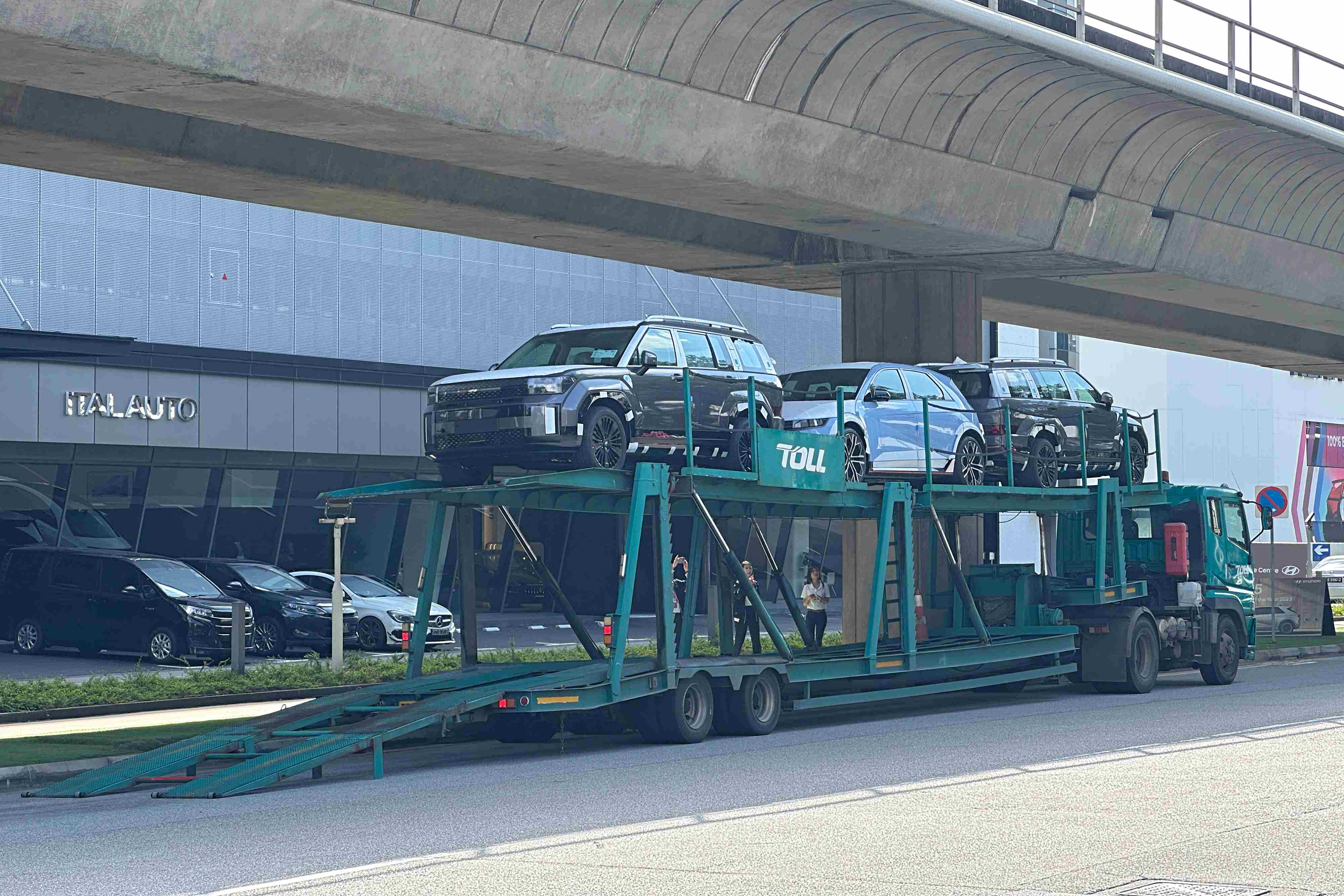
The Preferential Additional Registration Fee (PARF) formula is cut by 45 percentage points and its rebate cap is halved to $30,000.
Lawrence Wong, Singapore’s Prime Minister and Minister for Finance, announced in the country’s 2026 Budget Statement on February 12 that the Preferential Additional Registration Fee (PARF) rebate schedule and cap for newly-registered passenger cars has been revised downwards.
The new PARF formula takes effect from the second COE bidding exercise of February 2026 (Feb 16-20, with the results out on Feb 20 due to the Feb 17-18 Chinese New Year public holidays).
According to PM Wong and LTA (Land Transport Authority), PARF is intended to encourage the timely renewal of the vehicle population so that it is safer and less pollutive; with electric vehicles (EVs) being less pollutive than conventional petrol cars and becoming more commonplace in Singapore, the need to encourage early deregistration through the PARF rebate is reduced.
The reduction in PARF rebates is basically a corresponding adjustment in vehicles-related “taxback” from the Government for owners of cars which are scrapped before the end of their initial 10-year COE lifespan.
The halving of the PARF rebate cap from $60,000 to $30,000 provides another “taxback saving” for the authorities, which had introduced the $60k PARF rebate cap in 2023 February, together with a more progressive ARF tax structure that was more punitive than ever for passenger vehicles with an OMV (Open Market Value) of above $80,000.
| Car's age at deregistration | Previous PARF rebate | Revised PARF rebate (applicable to new cars from second COE bidding in 2026 February) |
| Up to 5 years | 75% of ARF paid | 30% of ARF paid |
| > 5 years but ≤ 6 years | 70% of ARF paid |
25% of ARF paid |
| > 6 years but ≤ 7 years |
65% of ARF paid |
20% of ARF paid |
| > 7 years but ≤ 8 years |
60% of ARF paid |
15% of ARF paid |
| > 8 years but ≤ 9 years |
55% of ARF paid |
10% of ARF paid |
| > 9 years but ≤ 10 years |
50% of ARF paid |
5% of ARF paid |
| More than 10 years | No PARF rebate | No PARF rebate |
| PARF rebate cap | $60,000 | $30,000 |
The unexpected CNY “reverse ang pow” issued by LTA took motor traders by surprise, with EV-centric retailers feeling more positive about the major transport policy change than dealerships which sell mostly petrol-powered new cars, including hybrids.
Anthony Teo, managing director of Vantage Automotive, whose BYD/DENZA big-sellers dominated the Singapore sales charts in 2025 and 2024, told Motorist: “BEVs are not affected, because they have almost no ARF, but ICE and hybrids will be affected. This will steer the consumers to consider BEVs.”
Soh Ming, managing director of Volt Auto which distributes Dongfeng in Singapore, said: “I understand the rationale. As EVs go mainstream, Singapore Government needs less scrap-early incentives. This shifts the depreciation and trade-in/finance benchmarks, but keeps EV adoption on track. However, this directly affects the resale values of non-electric vehicles, or rather, cars with a higher ARF value, which will entice new buyers to move towards EVs.”
Lee Hoe Lone, managing director of Premium Automobiles which represents four Chinese EV brands here (Zeekr, Xpeng, DEEPAL, AVATR), added: “Higher cost of car ownership, especially for non-EVs. It will cause more buyers now to consider buying an EV versus ICE. So, an EV and an ICE car with the same OMV of, say, $27,143, will have ARF $30k. The ICE car will have PARF of $1.5k at end of life, which was previously $15k, while the EV will have zero PARF after all rebates. Hence, ICE and EV with same OMV will have only $1.5k difference in PARF, but the EV will be sold $30k cheaper than the ICE because of EV-related rebates (this year).”
Feeling pretty positive too is Corinne Chua, managing director of Volvo Car Singapore, who said: “I see it as encouraging customers to buy EVs, as these cars are the least impacted by the reduction, considering that their PARF is already low after deducting the subsidies.”
On the negative side of the Leng Kee fence with regards to the greatly-reduced PARF rebates are Nissan, Hyundai and Honda.
Ron Lim, head of Nissan sales and marketing in Tan Chong Motor, lamented: “If there’s no longer much rebates in the equation going forward, the chances of drivers extending their car life will also increase. This in turn means lesser COEs will be recycled within 10 years, which will then impact new COE quota to be released 10 years later, and also means the likelihood of high-COEs environment will continue.”
Ng Choon Wee, commercial director of Hyundai in Komoco Motors, bemoaned: “Forcing prospects to buy EVs, the scheme makes EVs look more ‘attractive’ in cost of ownership.”
Nicholas Wong, chief executive of Honda in Kah Motor, said: “Doing that without reducing ARF will result in the slower scrapping of non-EV cars, because they last longer and it will make more sense now to keep them beyond 10 years since there is no PARF to be enjoyed. Cost of cars has just gone up by 45 percent!”
A motor trade general manager expressed a similar sentiment, telling Motorist that it is “essentially 45 percent tax increase in disguise.”
Vincent Ng, an automotive industry observer and a product consultant to Vincar Group (GAC, Aion, Hyptec), had the last word: “I think the dynamics of sales may swing, effectively helping EV sales emotionally, yet costing the ‘gahmen’ nothing. At the same time, because PARF is reduced, ‘gahmen’ can pocket more of the ARF paid. It is a tax thing.”
Super App for
Vehicle Owners


Download the Motorist App now. Designed by drivers for drivers, this all-in-one app lets you receive the latest traffic updates, gives you access to live traffic cameras, and helps you manage LTA and vehicle matters
Did you know we have a Motorist Telegram Channel? Created exclusively for drivers and car owners in Singapore, you can get instant info about our latest promotions, articles, tips & hacks, or simply chat with the Motorist Team and fellow drivers.