Fellow Motorist: Jeffrey Goh, co-founder & group chief executive officer, AXS
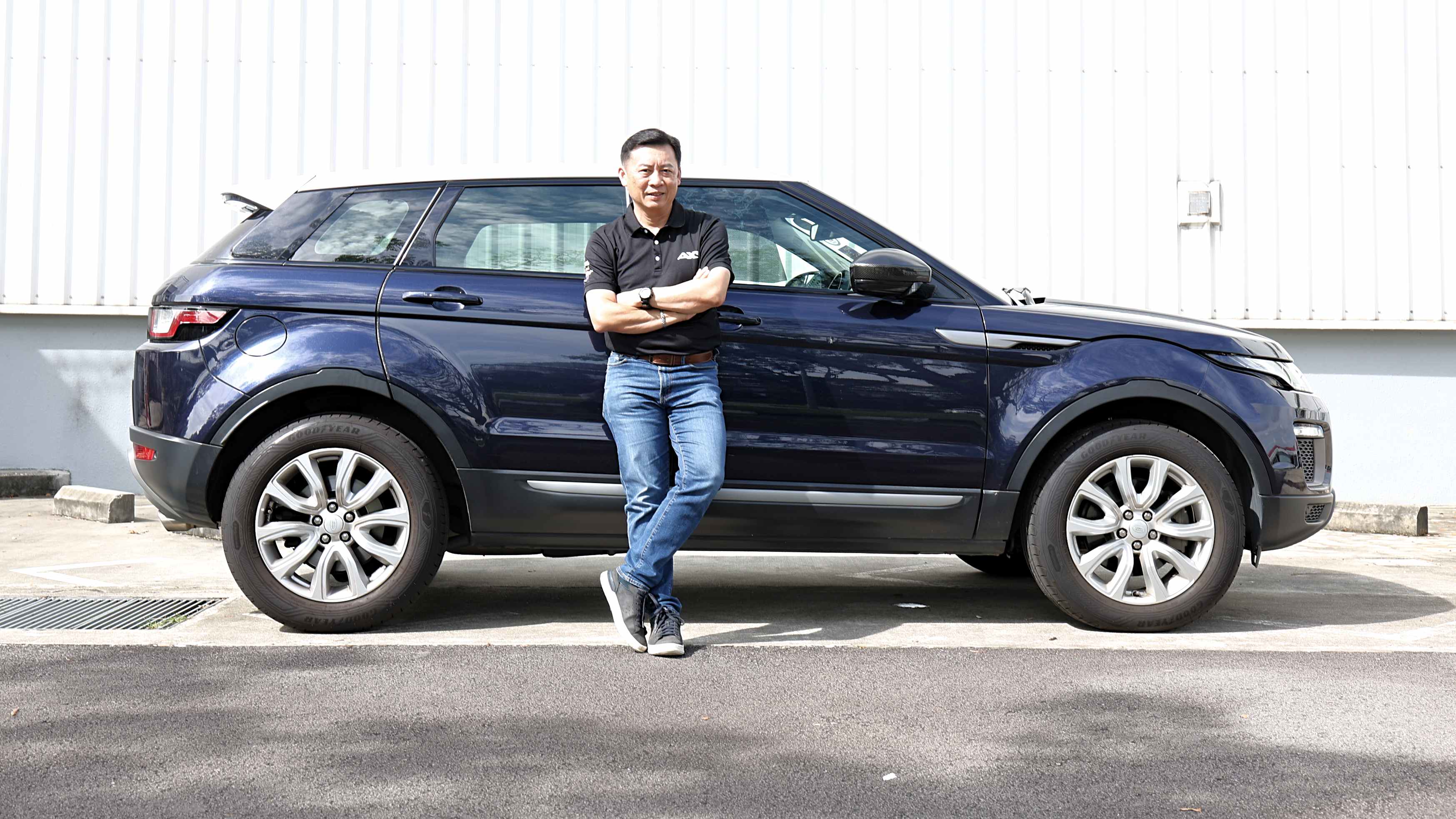
Mr Goh, 57, is a Singaporean technopreneur who co-founded AXS 25 years ago on the belief that payments should remove friction. We chat with the easygoing gentleman about motoring, cars, home-grown digital technology, and a bit of North America.
When and where did you get your driving licence?
1985 in Toronto, Canada, on my first attempt. I only learnt four hours of driving, that’s it - pass! They only see how you handle certain situations.
What did you learn your driving in?
I don’t think we have it here. It was quite a cool car, the two-door Corolla GTS.
What was your very first car after getting your driving licence?
Toyota Corolla SR5, not available in Singapore. It was the precursor to AE86. Cool wheels. Guess how much I bought the car for? I paid USD 4,200 for my three-year-old car. I remember because I called my mum for the money [laughs]. I needed to pay tuition, but I had to get a car first!
Any other past car of yours which was also memorable?
After four years with the Corolla, I changed to Honda CR-X, red colour. Four-year-old car, USD 2,950. In the US, cars are disposable, so nobody cared about them.
What is your daily drive in Singapore?
Range Rover Evoque, personal car.
What is your ultimate dream car?
As a kid, you were dreaming about Lambo Countach. After that, you were influenced by Don Johnson in Miami Vice, his Ferrari with the strakes on the sides. But I guess in Singapore, only if you’re super rich and willing to spend the money (on a dream car). Financially, it doesn’t make sense.
I still believe that if you need a car in Singapore, no choice, more money for nation-building. To me, owning a car in SG carries an indirect tax. If you want it, you pay the tax. Jeffrey Goh as a young man with his two-door Toyota Corolla in Colorado, USA, almost 40 years ago.
What do you like about motoring in Singapore?
Driving along the expressway or normal roads, the traffic is predictable, 90 percent of the time, such as from your home to the airport. In other countries, you do not know the traffic. Singapore’s roads are very good, except once a while, a lot of roadworks. Here is one of the better cities to drive in, with proper planning.
What do you dislike about motoring in Singapore?
The interconnectivity between two expressways can be improved - sometimes it’s just one lane. When you think about road design, Singapore can still learn from other countries like US and Japan, especially highways. Even though we have a smooth and nice CTE, the traffic is not smooth because of the up-and-down undulations. Then we have vehicles of different sizes, such as trucks.
What do you miss most about the good old days of motoring in Singapore circa 2000?
I would say that we had less vehicles on the road compared to now. At that time, the Government was working towards usage rather than ownership of cars. With the adjustments, ERP, and avoiding of peak hours, I think driving is fundamentally still stress-free in Singapore.
What is the most satisfying aspect of your role as AXS Group CEO?
Since we were founded 25 years ago, AXS has been trying to provide convenience to customers.
If you wanted to pay bills, you needed to line up at post office. We were ahead of our time in providing one-stop, non-stop, 24-hour transactional kiosks to ease the pain of people rushing to pay their bills before the post office closed. Bill payment used to be in the early part of the day, but these days it’s after dinner time.
And what is the most challenging aspect of your job in AXS?
Relooking at our organisation and business models. When I came back to the company after some 12 years away, it was already 23 years old. We can do a lot of things, such as upgrading the tech stack. We also have better ways to do things, such as putting a lot of services on the cloud instead of managing our own computer systems.
We can also work remotely. This type of technology really helps us to be more productive while constantly thinking about how we can improve the lives of Singapore residents.
If you didn’t build up AXS, what would you have done instead?
Ever since my third year in university, I was always inspired to own my own business. But to do that, you need three to five years of corporate work.
My first job was with National Computer Board, a Government statutory board, where I learnt about the civil service computerisation programme and how we link up during that time - passports, digital IDs. We prototyped a one-stop government service kiosk in 1992.
After that I moved on to IBM for three years, where we implemented the SingPost self-service automated machine, or SAM, which had this vending feature to issue stamp booklets. I went to do my own business in 1996.
How different do you want AXS to be in 2030 compared to 2025?
One of the main tasks for me is to transform the business in a couple of ways. One, of course, is looking at payments. As a Singapore-based company, we also need to branch out. There is no Singapore payment platform that is huge in the region, with fintech firms mostly talking about cross-border remittances.
Why does no one want to be the Stripe of Southeast Asia? AXS aspires to be that.
Because this is a very unique geographical region, where we have over 660 million people, 10 different countries, 10 different cultures, and different ways to do things. It’s not a uniform geographical area. We celebrate all the differences, but when it comes to doing business, we need to know local culture. Being here, we know Southeast Asia much better than the rest.
What is in your roadmap for the AXS Drive app?
We are doing a KYC (know your customer). You will login with email ID or your face, then we’ll centralise all your consolidated bills and AXS transactions in one portal - your portal.
We’re also working towards expanding the cardless parking function of AXS Drive to HDB/URA carparks. We’re waiting for our volume to ramp up on the commercial side of things, because building the whole ecosystem is a chicken-and-egg. As a business, we have to take it as it is. If tomorrow I can turn on our app’s HDB carparks support, I’ll turn it on straightaway.
When I think about motorists, I also think about how we can help them and what services we can bring to AXS Drive. One of them is pay-per-use roadside car recovery in Malaysia for Singaporeans who drive up and just want peace of mind. We’re in discussion with our Malaysian counterparts, including partners which are providing the country’s traffic fines payment system.
Who in Singapore’s tech sector, past or present, do you admire the most?
Those Singapore companies that strike out and make a name for themselves, such as the late Sim Wong Hoo (of Creative Technology), who made the Sound Blaster card and came up with innovative products. Who imagined our computer could make music?
Another Singapore company that made it is Interwoven, listed on Nasdaq and founded by Singaporean Peng T. Ong.
What advice would you give a young man who wants to start his own tech company?
Before doing your own startup, go through a few years in corporate life. And dare to dream.
If you’re young, the opportunity cost is not high. Nobody knows whether you’ll succeed or not, but try! In Silicon Valley, they’ll punish you for not trying, but they’ll reward you handsomely for making it successful.
Singapore is a good place to start, but for survivability and scaleability, you need to scale into the region. That is why Government is always telling us to move out of Singapore, like Charles & Keith. For Singapore to survive, we need to be enterprising.
What are your hobbies and pastimes?
Plenty, I would say, because I’m curious about everything. I like gardening and have two species of bananas at home, and I also plant bamboo.
I like to use my hands to do things. I do carpentry and I have power tools. When there are issues, I would try to fix it. I service my own air-con, sometimes better than the serviceman, because I know what to do.
We’re now in the information age where we can learn everything online, such as YouTube videos to guide you, but we’re overloaded with info.
Sports-wise, I was the former president of Singapore Cycling Federation. I was so happy to see our BMX track in Choa Chu Kang, Brickland area. We raised close to $4 million of funds to build that.
What is your favourite food and drink?
Hokkien mee, char kway teow and chicken rice. Teh-C.
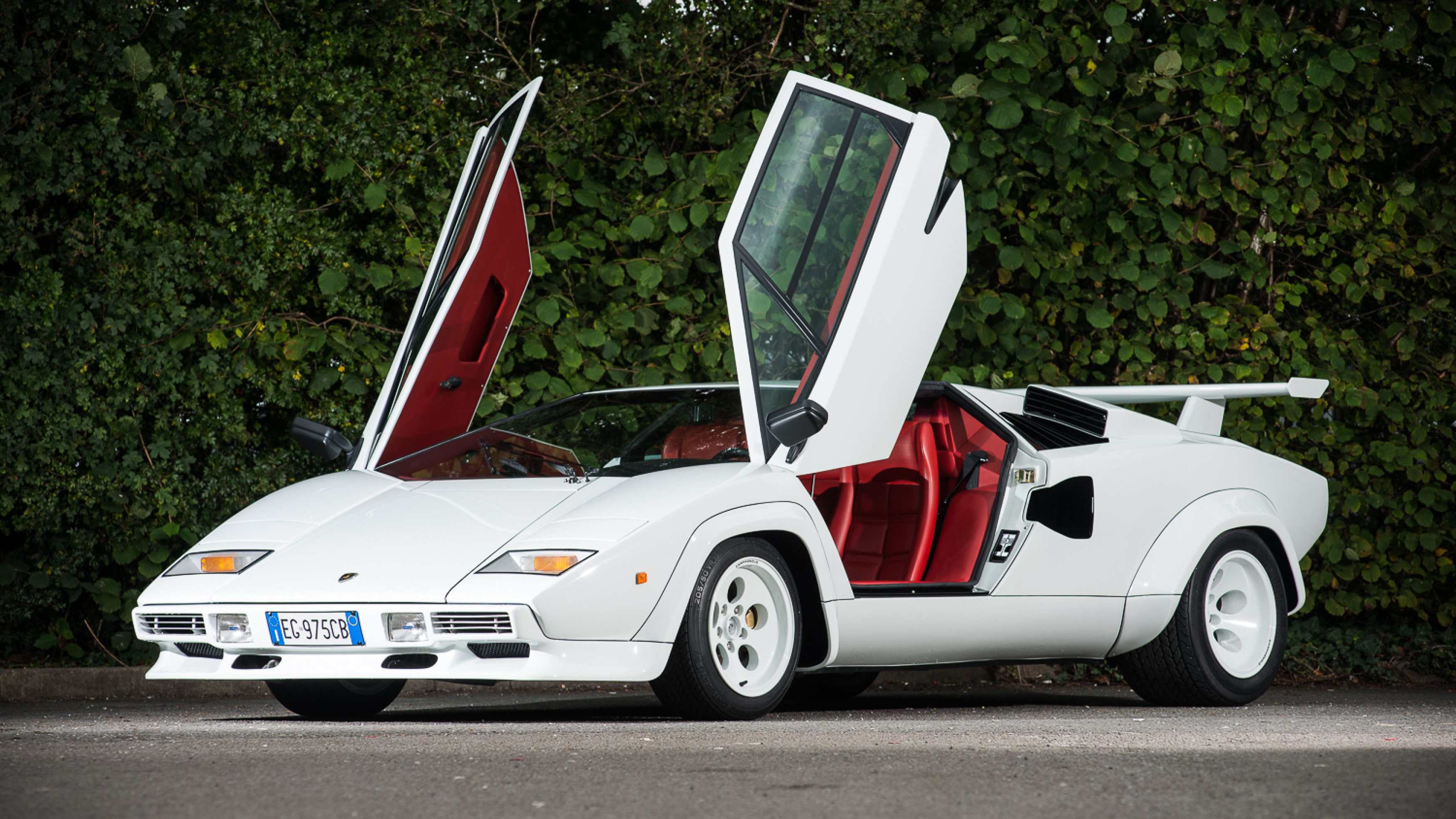 The Lamborghini Countach was a dream car for Jeffrey Goh in the 1980s.
Read More: Fellow Motorist: Johnny Wong, racing driver & managing director of Best Chemical Co.
Super App for
Vehicle Owners


Download the Motorist App now. Designed by drivers for drivers, this all-in-one app lets you receive the latest traffic updates, gives you access to live traffic cameras, and helps you manage LTA and vehicle matters.
Did you know we have a Motorist Telegram Channel? Created exclusively for drivers and car owners in Singapore, you can get instant info about our latest promotions, articles, tips & hacks, or simply chat with the Motorist Team and fellow drivers.