OBU and ERP 2 will track you for your own protection
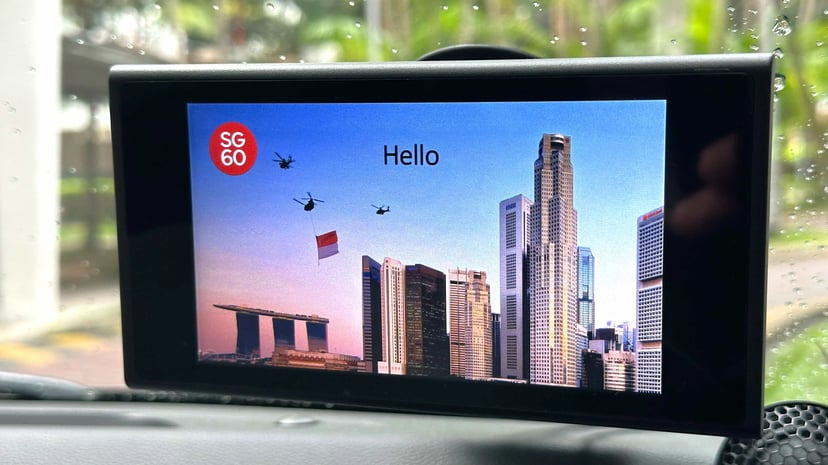
Singapore's next-generation Electronic Road Pricing (ERP 2) system will give the authorities another tool to track vehicles and support criminal investigations from January 2027. Information collected through motorists' on-board units (OBUs) can be used to help prevent, detect, and solve crimes.
The announcement was made in Parliament on 3 November 2026 by Senior Minister of State for Home Affairs, Goh Pei Ming, who confirmed that the Home Team intends to use ERP 2 data for law-enforcement purposes.
For motorists, this raises familiar questions about how much information the Government can collect and who can access it. The announcement also brings back memories of the TraceTogether controversy during the COVID-19 pandemic, when the use of personal data for criminal investigations sparked public concern.
ERP 2 OBU data to become another tool for the police.
Goh said the Home Team expects to use ERP 2 data from January 2027 to prevent, detect, deter, and solve crimes.
Responding to a parliamentary question from Nee Soon GRC MP Jackson Lam, Goh explained that Home Team agencies are legally authorised to obtain information from various sources, including sensors, for investigations.
Under Section 20 of the Criminal Procedure Code, the police can order the production of documents or other material considered necessary for an investigation, inquiry, trial or other proceeding.
Goh added that ERP 2 information would be subject to existing legal and data governance safeguards. Police will retain vehicle-specific information only for as long as necessary to complete an investigation or relevant court proceedings.
This effectively makes the OBU, originally introduced for Electronic Road Pricing, another potential source of evidence for criminal investigations. 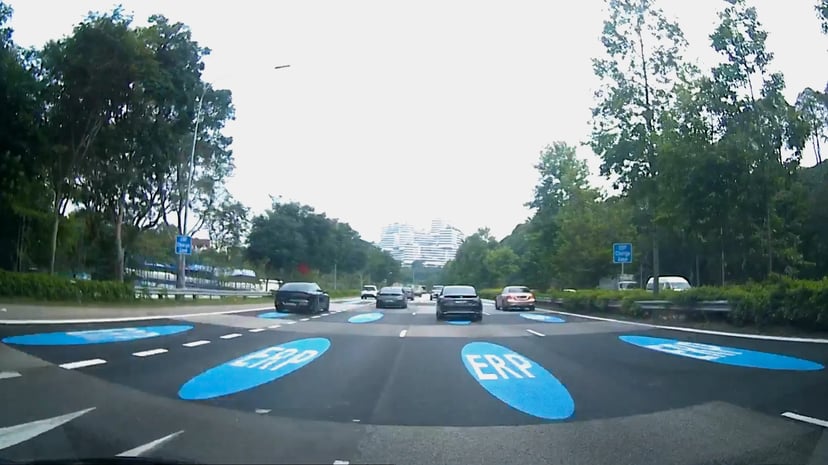
How does ERP 2 track vehicles?
Unlike the existing ERP system, which relies on physical gantries, ERP 2 uses Global Navigation Satellite System (GNSS) technology to determine vehicle locations.
The OBU communicates with satellite positioning systems and roadside infrastructure to support road-pricing functions and other motoring services.
Senior Minister of State for Transport, Sun Xueling, explained in Parliament that individual vehicle data is aggregated and anonymised when transferred to the Land Transport Authority's (LTA) backend system for traffic management and transport planning.
However, vehicle-specific location information can be retrieved for enforcement purposes when necessary.
LTA already uses such information to detect offences including illegal cross-border taxi services and the use of deregistered vehicles. Other applications include identifying off-peak cars driven outside permitted hours and vehicles under lay-up schemes being used on public roads.
Sun also said the OBUs feature encryption and secure data storage, with information accessible only to the Government. Motorists cannot directly access the data stored within their units.
TraceTogether controversy - have we been here before?
The announcement may remind Singaporeans of the TraceTogether controversy in January 2021.
Introduced during the pandemic, TraceTogether was designed to identify people who had come into close contact with infected individuals. However, the Government's earlier assurances that it was intended for contact tracing came under scrutiny when police access was revealed.
On 4 January 2021, then-Minister of State for Home Affairs, Desmond Tan, told Parliament that the police could access TraceTogether data for criminal investigations under the Criminal Procedure Code.
The disclosure prompted public concern, particularly because this possibility had not been made clear in earlier privacy assurances. The Government subsequently acknowledged its error in not stating that TraceTogether data was not exempt from the Criminal Procedure Code.
It was also revealed that the police had requested TraceTogether data for a murder investigation involving an incident in May 2020.
Following the controversy, the Government introduced legislation restricting the use of TraceTogether and SafeEntry data for criminal investigations to seven categories of serious offences. The COVID-19 (Temporary Measures) (Amendment) Bill was passed on 2 February 2021.
The episode highlighted how public trust can be affected when information collected for one purpose is subsequently used for another. 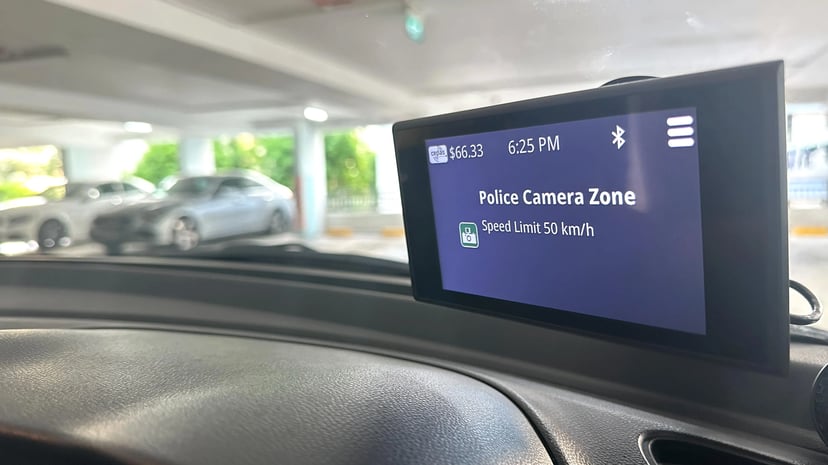
ERP 2 and TraceTogether - what is different?
While both cases involve information collected for a specific public purpose being made available to the authorities, their legal frameworks differ.
TraceTogether data was eventually subject to statutory restrictions limiting its use in criminal investigations to seven categories of serious offences.
For ERP 2, the Government has referred to existing powers under the Criminal Procedure Code and wider safeguards governing Home Team access. No equivalent seven-category restriction has been announced.
The information collected also differs. TraceTogether recorded proximity interactions between users, while ERP 2 uses satellite positioning technology to support vehicle location and road-pricing functions.
Nevertheless, both cases raise questions about the boundaries of data collection and how information may be used beyond its original purpose.
So what does this mean for Singapore motorists?
From 1 January 2027, Singapore-registered vehicles will be required to have the next-generation ERP 2 OBU as the country completes its transition from the existing ERP system that uses the IU (in-vehicle unit).
Besides road pricing, the OBU supports additional functions such as traffic information and charging-location alerts. OBUs' vehicle-specific data can also be used for authorised enforcement purposes, including criminal investigations where legally permitted.
The authorities have highlighted encryption, secure storage, restricted access and existing legal safeguards as measures to protect the information collected.
For motorists, the OBU will therefore serve a role beyond calculating road charges, potentially helping investigators establish where a vehicle was driven and when it was there.
As Singapore moves towards a more connected transport network, how vehicle-generated data is accessed and used will remain an important privacy consideration.
Super App for
Vehicle Owners


Download the Motorist App now. Designed by drivers for drivers, this all-in-one app lets you receive the latest traffic updates, gives you access to live traffic cameras, and helps you manage LTA and vehicle matters
Did you know we have a Motorist Telegram Channel? Created exclusively for drivers and car owners in Singapore, you can get instant info about our latest promotions, articles, tips & hacks, or simply chat with the Motorist Team and fellow drivers.


