Crouching tiger, half-hidden dragon
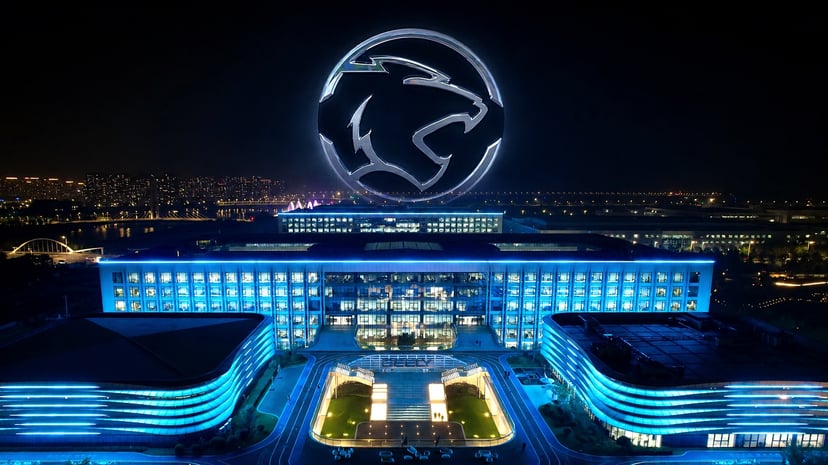
Proton the crouching tiger and Geely the half-hidden dragon.
How clear is the potential of Malaysian tiger automaker Proton? How secretive is the power of Chinese automotive dragon Geely?
Based on Motorist’s two-city, multi-facility media tour with Vincar Group, the potential of Proton is as clear as a typical day in the tropical sun. Not only in its home country of Malaysia but also across the border in Singapore, where it had been absent for 11 years before making a comeback in 2025 with e.MAS 7, a sensible battery-electric SUV for practical people.
As for Geely holding its cards and future cars close to its chest, I didn’t spot what could be camouflaged Proton prototypes at Tanjung Malim and Hangzhou Bay, so the secrets remained safe.
Their no-show dashed what little hope I had of breaking a story about Proton’s top-secret project with Geely to create a retro-futuristic, new-generation Satria GTI (garang turismo istimewa) which would be fierce, fast and special.
However, I did see some state-of-the-art research & development, along with state-of-the-heart collaboration between the Malaysians and their Chinese counterparts when researching and developing modern Protons, whether fully electric, hybrid petrol-electric or “classic” internal combustion.
The past and present of Malaysian motoring came together nicely in Proton City, like a heartwarming plate of old-school nasi lemak served in a newer setting.
Located in Perak state’s Tanjung Malim about 70 kilometres north of Kuala Lumpur, Proton City is the sprawling “hometown” of the rejuvenated Southeast-Asian automaker.
The place started in 2003 as Proton’s second factory after the historical Shah Alam plant in Selangor where the semi-Mitsubishi Saga began, but only grew strongly and sustainably following the Proton-Geely strategic partnership established in 2017.
In the nine years since then, more than 5 billion ringgit (equivalent to about S$1.6 billion) had been invested in the facility to scale up its manufacturing capability. In addition to a powertrain plant with an annual output of 240,000 units, Tanjung Malim also houses the country’s first dedicated EV assembly plant with an initial production pipeline of 20,000 cars per year.
Thirty-eight new models including variants and facelifts were launched, led by the X70 (a rebadged Geely Boyue) in 2018, and the export drive was boosted from 18 markets to 33, with Singapore, Nepal and Brunei among the most recent additions.
Proton even launched a sub-brand, e.MAS, which focuses on new-energy vehicles. It hit the road in 2024 with e.MAS 7, which combined Asia bagus and Malaysia boleh for the very first time in an electric SUV that emphasises practicality and value for money.
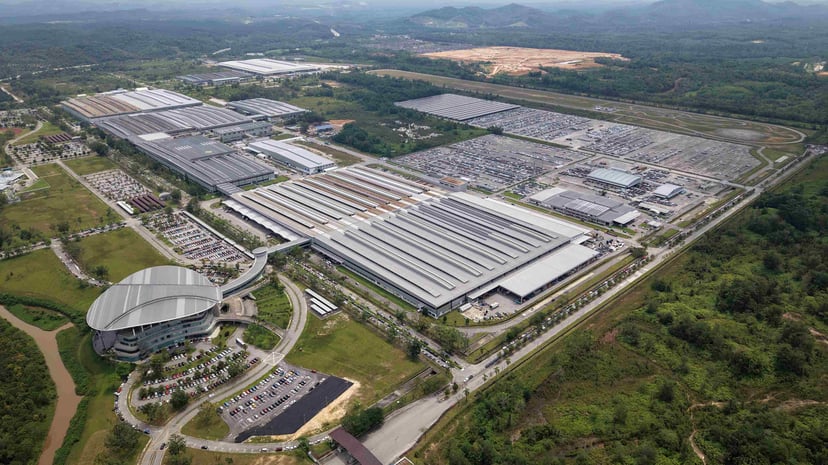 Proton City in Tanjung Malim, Perak.
Appropriately enough, my brief test-drives at Proton’s straightforward Tanjung Malim circuit featured the company’s past and present on wheels.
I experienced Proton’s yesterday once more in a Saga, now in its fourth model generation as the original negaraku runabout for the masses. Proton Sagas of the 1980s and 1990s were not only about car-building in the Malaysia context, but also supported nation-building with industrialisation and interstate mobility.
The 2026 Saga Premium I drove for a bit was basic and humble, gently transporting me back to a simpler motoring world of laidback performance, manual handbrake, economical materials and unremarkable 15-inch wheels (upsized from teeny 14-inch). All for just under RM50,000 (less than S$16k).
The only speedy aspect of the Proton Saga is how hard it races against the Perodua Bezza in their domestic market, where the two cars have been fender to fender in the Malaysian cheap-sedan sales chart.
After the charming throwback that was the Saga, I returned to today’s Proton with a pair of modern 1.5-litre petrol SUVs - the turbocharged X70 and the naturally aspirated, unnaturally efficient e.MAS 7 PHEV. These two vehicles are substantially different, but both benefit from the pragmatic engineering of Geely-boosted Proton.
The X70 got the bola rolling for Proton’s growth with Geely, and continues to be a core model in Malaysia where cost-effective SUVs with reliably strong performance and excellent interior space are always popular.
The plug-in hybrid electric version of e.MAS 7 is currently (up to June 2026) the best-selling PHEV in Malaysia, because it offers a lot of petrol-electric SUV for the ringgit and plenty of realistic range too (easily 1,000 kilometres from a full tank of subsidised fuel).
Meanwhile, its fully-electric sibling has been upgraded with a bigger battery pack (good for a WLTP range of up to 450 kilometres, which is 40km more than before), faster DC recharging at 115kW, and multi-mode massage function for the front seats.
The two new e.MAS 7 variants will make their way from KL to LK (Leng Kee) later this year, albeit via Proton’s close China connection. 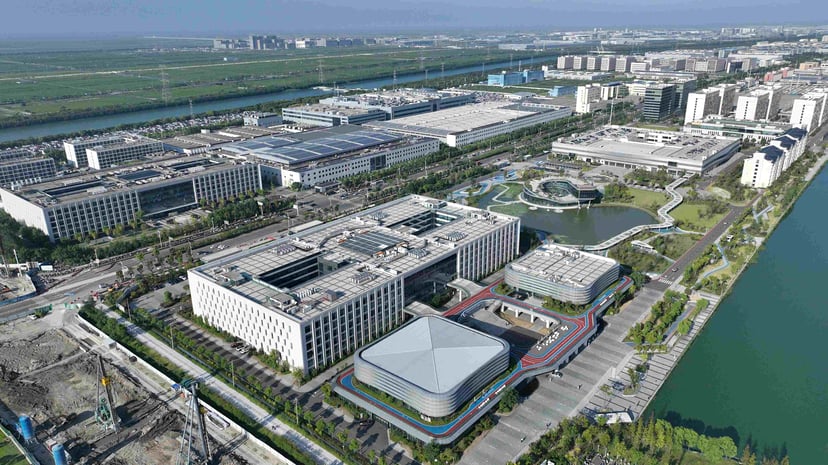 Geely Research Institute dominates the Hangzhou cityscape.
The closeness of that connection was obvious when I visited the Hangzhou home of Geely gee-whiz technology, which has been applied to a global rojak of car brands covering an entire spectrum of mostly electric motoring segments, from mainstream to premium and from the accessible to the downright incredible.
Proton and Vincar brought me here, so my auto focus would not be too driven to distraction by random non-Proton "carmeo" appearances during our walkabout. Anyway, it would be tricky for me to focus on autos, because this is a secure place where unauthorised photography/videography is not allowed.
Dutifully, I pasted the little stickers over my smartphone's lenses and left my proper cameras on the bus. Said stickers were issued to the media attendees by a Geely security guy who looked like a pugilistic cross between Jet Li and Muhammad Ali, so I had to comply.
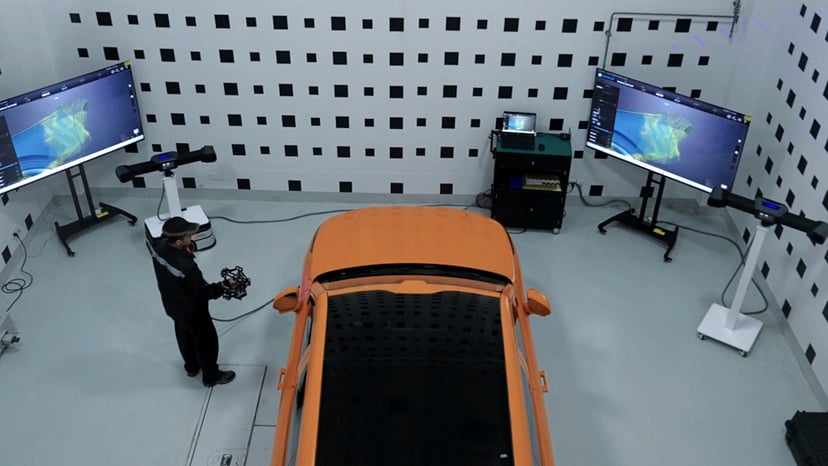
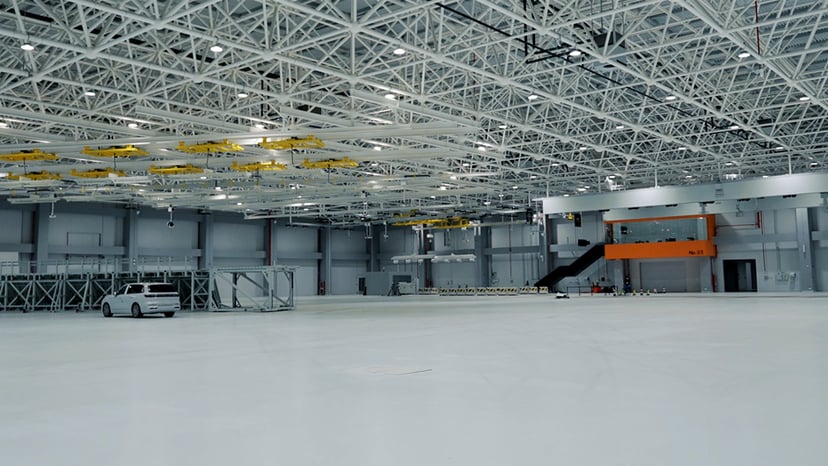 Safety standards across the Geely brand portfolio, from Proton to Polestar, are strengthened in here.
It was quite a whirlwind tour of the expansive facilities - in more ways than one, because it included a wind tunnel session.
We also checked out the impressive Geely Global Safety Centre, which conducted a crash test of what appeared to be the latest Smart Fortwo microcar just before our arrival. The engineers certainly looked busier than the crash test dummies seated together in a science lab, perhaps awaiting their next painful assignment while listening to Michael Jackson’s Heal The World… “make it a better place for you and me and the entire human race”.
Speaking of fellow humans, there are about 25 Malaysians living and working in Geely’s Hangzhou headquarters under Proton’s R&D division.
One of them, Effendy from the Electrical & Electronics department, said their workplace was created to transfer knowledge and share ideas between Proton and Geely. He added that they collaborate with their Chinese counterparts to gain something together, such as engineering improvements and software updates.
Having seen the technical heart and sincere soul of the Proton-Geely “crouching tiger, half-hidden dragon”, I reckon the Malaysian automotive tiger is on track to achieve roaring success on both sides of the Causeway and further afield. It's crouching now and pouncing next.
Super App for
Vehicle Owners


Download the Motorist App now. Designed by drivers for drivers, this all-in-one app lets you receive the latest traffic updates, gives you access to live traffic cameras, and helps you manage LTA and vehicle matters
Did you know we have a Motorist Telegram Channel? Created exclusively for drivers and car owners in Singapore, you can get instant info about our latest promotions, articles, tips & hacks, or simply chat with the Motorist Team and fellow drivers.